The Alters: When Game Systems Become Storytellers

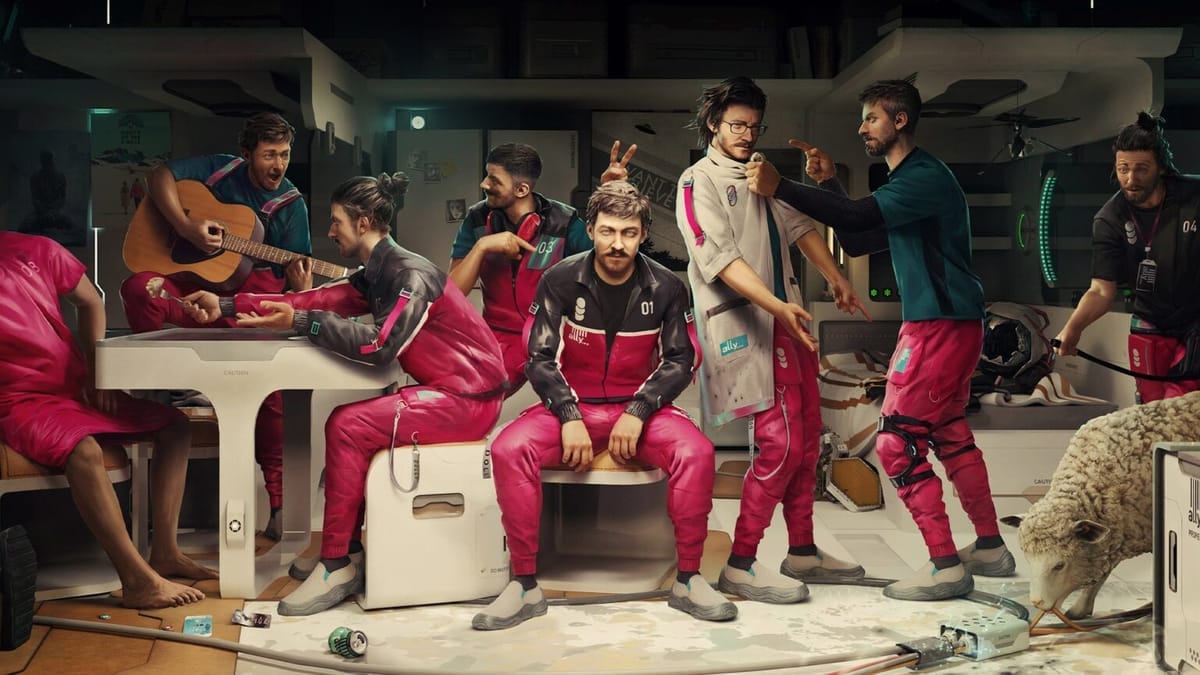
The Alters asks a question most games treat as flavour text: Who would you be if you'd made different choices? It then takes the answer and turns it into gameplay.
You don't recruit a crew. You manufacture one. Alternate versions of yourself built to solve the problems that you can't solve alone. Each new specialist is a branch from your past, forced to coexist alongside the life you actually lived.
This game is a brave experiment in making your identity the main resource you manage. It's bold, it's occasionally exhausting, and it's one of the smartest examples of systems-driven storytelling I’ve seen in years. It stands out not just because it’s emotional, many games are, but because it makes meaning operational.
In this deep dive, I’ll break down the loop that drives the game, the cracks that challenge it, and what it means to design mechanics that actually speak.
I've put together a handy 📖 Glossary to help you follow along!
What is it?
The Alters is the latest release from 11 bit studios, the team behind This War of Mine and Frostpunk.
Released in June 2025, The Alters is a survival base-builder where you play as Jan, a miner turned astronaut stranded on a hostile planet with a base that's constantly one failure away from disaster.
To survive, Jan relies on a quantum supercomputer called the Tree of Life, a branching interface that generates alternate versions of himself, each shaped by a different life path he could have taken.
Each new Alter you create changes the shape of your run: what you can build, what you can sustain, and which problems stop being problems... at least for a while.
Why is it Important?
The Alters is more than just a mechanical novelty. It’s proof that games can use their systems to carry real emotional weight.
Early reception praised its approach to mental health themes, but the real achievement is how the survival mechanics support deeper storytelling without sacrificing mechanical depth.
Many games that try this eventually flinch*. The emotion ends up in a cutscene, or the mechanic just becomes decoration. The Alters shows you don’t have to make that trade, and portrays a cautionary tale about what it costs if you don’t.
It arrives at a moment where production costs are rising, players demand richer experiences, and teams are forced to design systems that multitask. The Alters offers a template for making every system earn its place.
It's a masterclass in thematic coherence, but it also warns about the cost of making every detail meaningful.
What Makes It Different?
Most survival games follow a simple loop: gather → build → expand. The Alters adds one psychological twist that changes everything.
The main idea is what I’d call the Identity-Resource Loop: it turns personal history into actual gameplay.
The core idea is deceptively simple: Progress requires alternate versions of you. Not as dialogue trees. Not as cosmetics. As labour. As leverage. As liabilities. As the only reliable way forward.
In most survival games, your crew is made up of different characters with different skills. The Alters changes this: every crew member is actually you, just from a different life path.
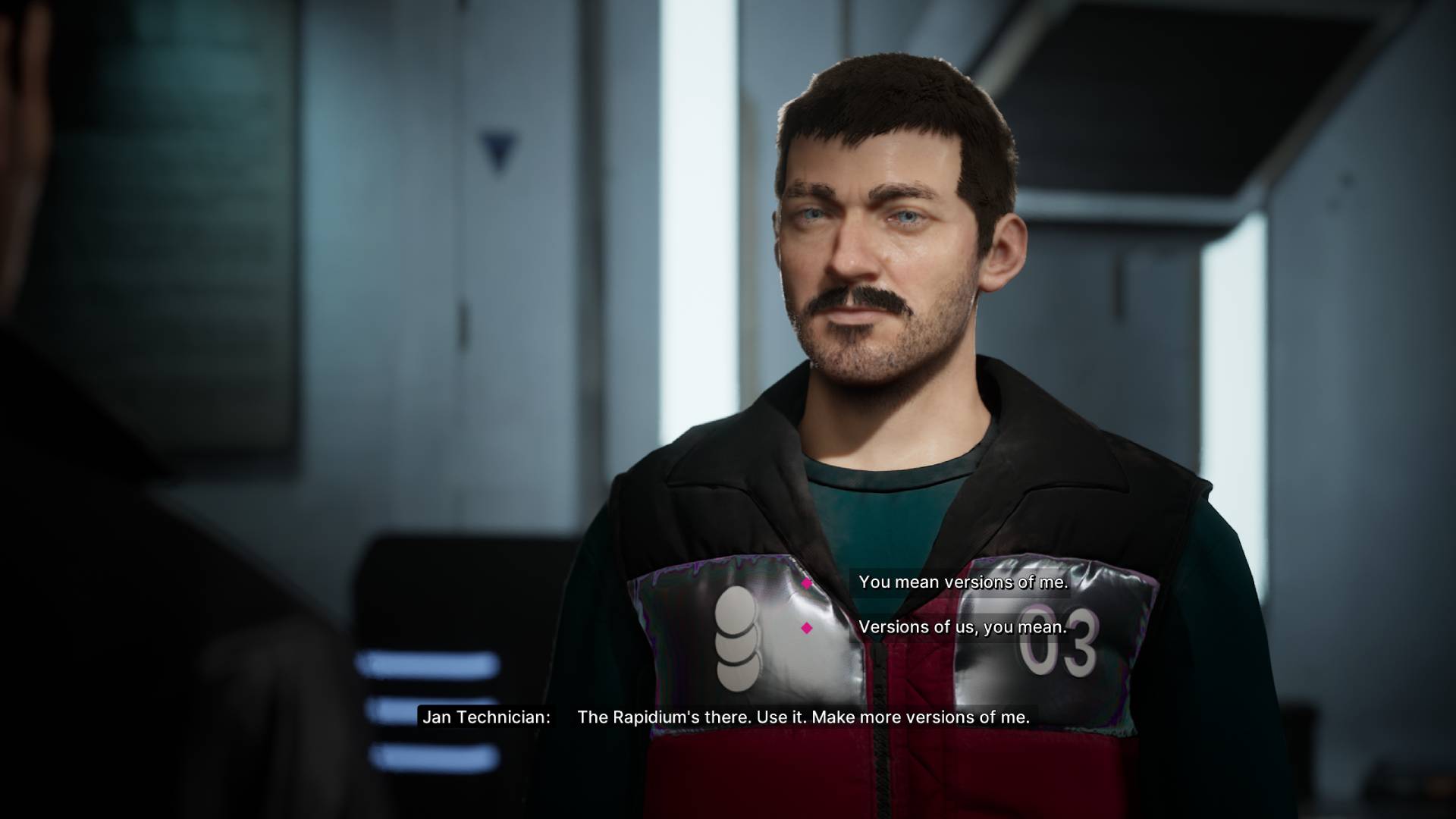
This creates a feedback loop where real problems prompt you to reflect on yourself. But here’s the twist: the game doesn’t just ask, "Who could you have been?" It makes you manage those other selves, handle their conflicts, deal with their friction, and live with their contradictions.
It's survival mechanics meets therapy session. And somehow, it mostly works!
The Identity-Resource Loop
The Identity-Resource Loop consists of three main parts: Need, Choice, and Consequence.
1: NEED (Something Breaks)
The base repeatedly pushes you towards specialisation. When you run into a problem, the solution isn’t usually a new tool or a bigger gun. It’s another you. Another life you didn't choose, now standing in your hallway with the skills you need.
The Alters makes you think differently: Which version of yourself has the skills you’re missing?
2: CHOICE (Digging Into Your Past)
You explore Jan’s past, searching for moments that could have helped you develop the skills you need. This goes beyond character creation. It's psychological archaeology.
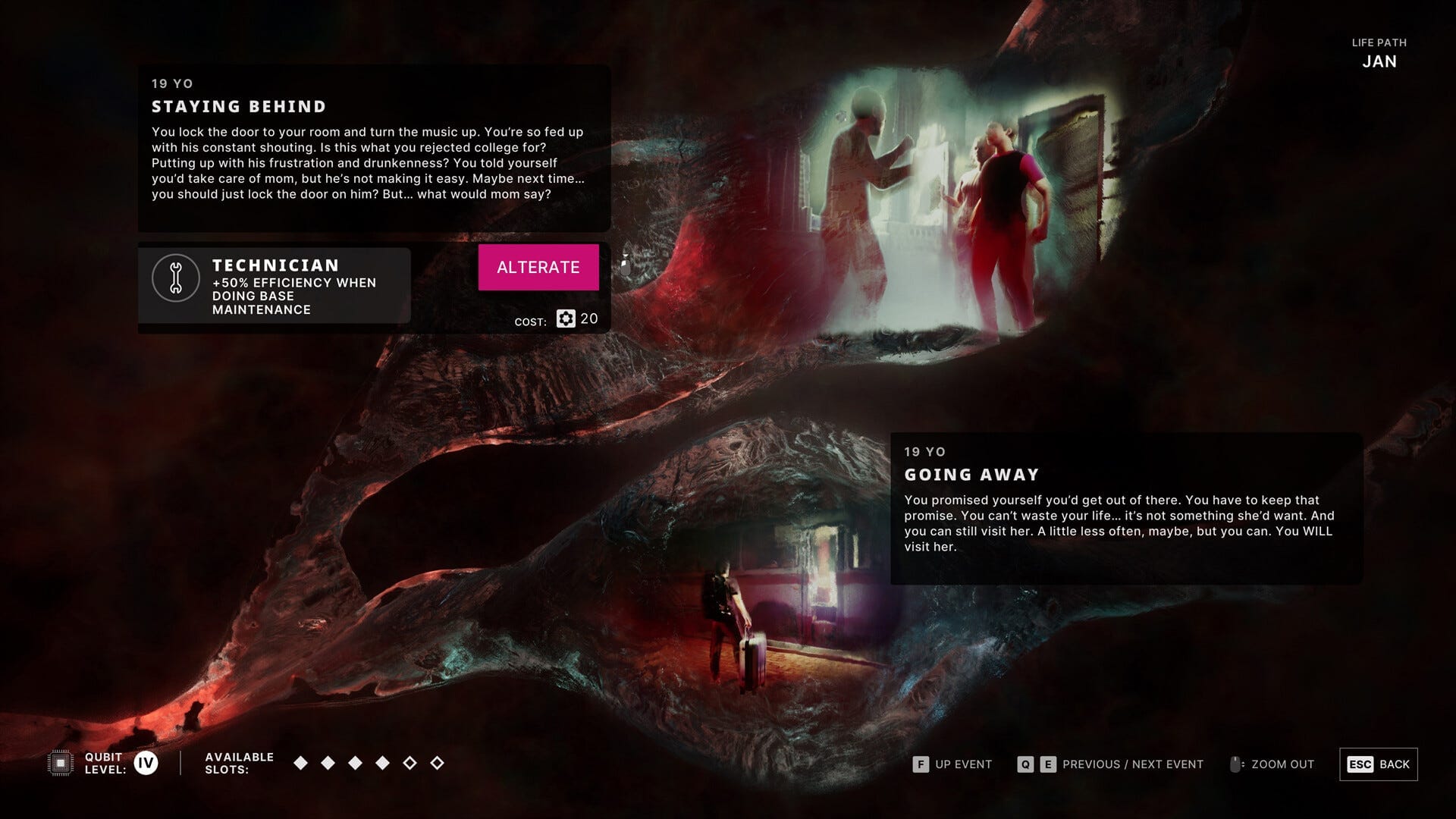
The Tree of Life displays different versions of Jan: one who graduated from college, one who worked overseas, one who stayed in a relationship, and so on. Each version offers the capability you need, but the cost isn’t just consumed the moment you create them. It's the ongoing overhead of keeping them alive, stable, and useful.
More mouths to feed, more needs to meet, and more emotional volatility to manage. They don’t join as upgrades—they join as people. And once they’re there, they don't stop taking up space.
Every new Alter increases operational complexity before it reduces it, a deliberate inversion of the standard resource loop.
3: CONSEQUENCE (Living With Your Choices)
This is where the game stops being about building a base and starts being about maintaining a culture. It's also where I started losing arguments with a digital version of myself, which is not something I expected from a survival game.
Creating an Alter gives you skills. It also gives you a person with their own priorities, insecurities, and thresholds.
The confident Jan clashes with the cautious Jan. The book-smart Jan looks down on the street-smart Jan. This is the loop's real consequence: You’re not just balancing power and output anymore. Now you’re managing morale, teamwork, and the human cost of building a team out of mutually incompatible lives.
This is where the system really gets interesting. You’re not just simply managing resources anymore. You're managing the contradictions inside your own head, externalised into a crew.
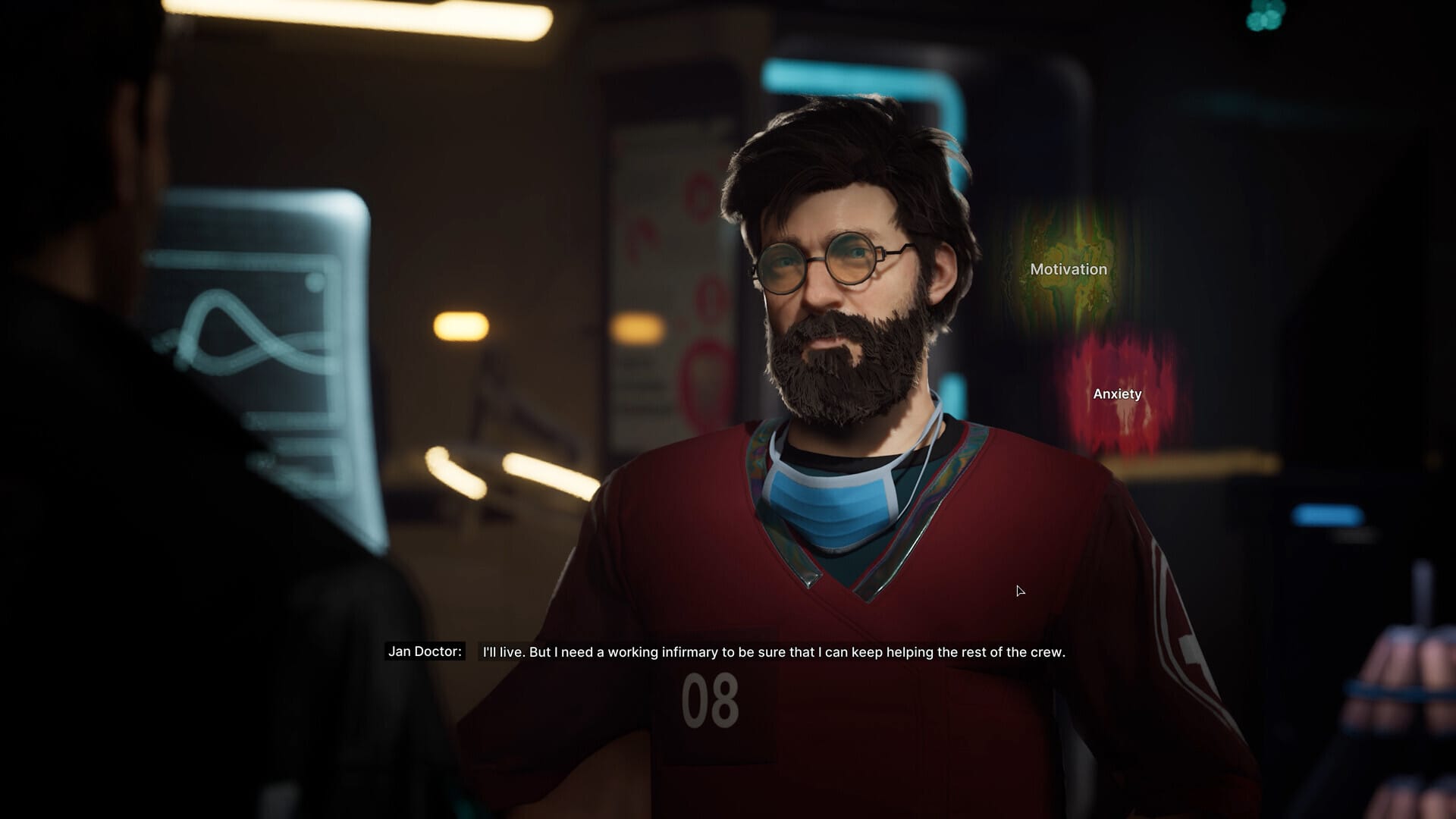
Alters ask for things to keep their mood steady, like building a room, prioritising a task, or proving you're listening. These requests show up as quests, but they function as emotional maintenance: small promises that keep morale from turning sour.
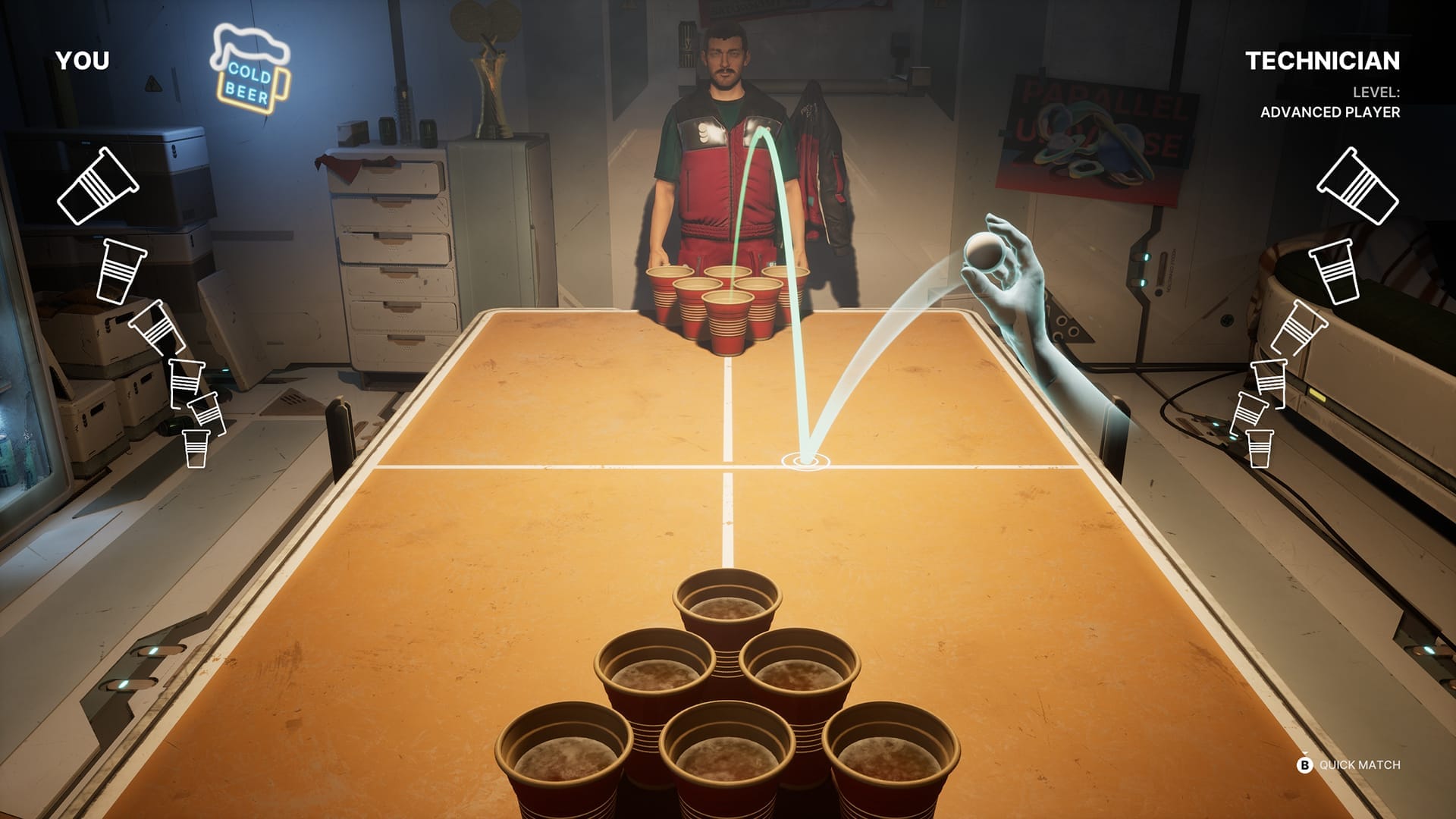
It's not all crisis management. You can bond with your crew through shared movies, downtime rituals, or even a one-on-one beer pong mini-game that I genuinely didn't expect to find meaningful. It's the kind of texture that makes the base feel lived in.
Ignore those needs long enough, fail a request, or make a decision they disagree with, and the game reacts. Not with a stat drop, but with a relationship turning cold.
The Loop in Action
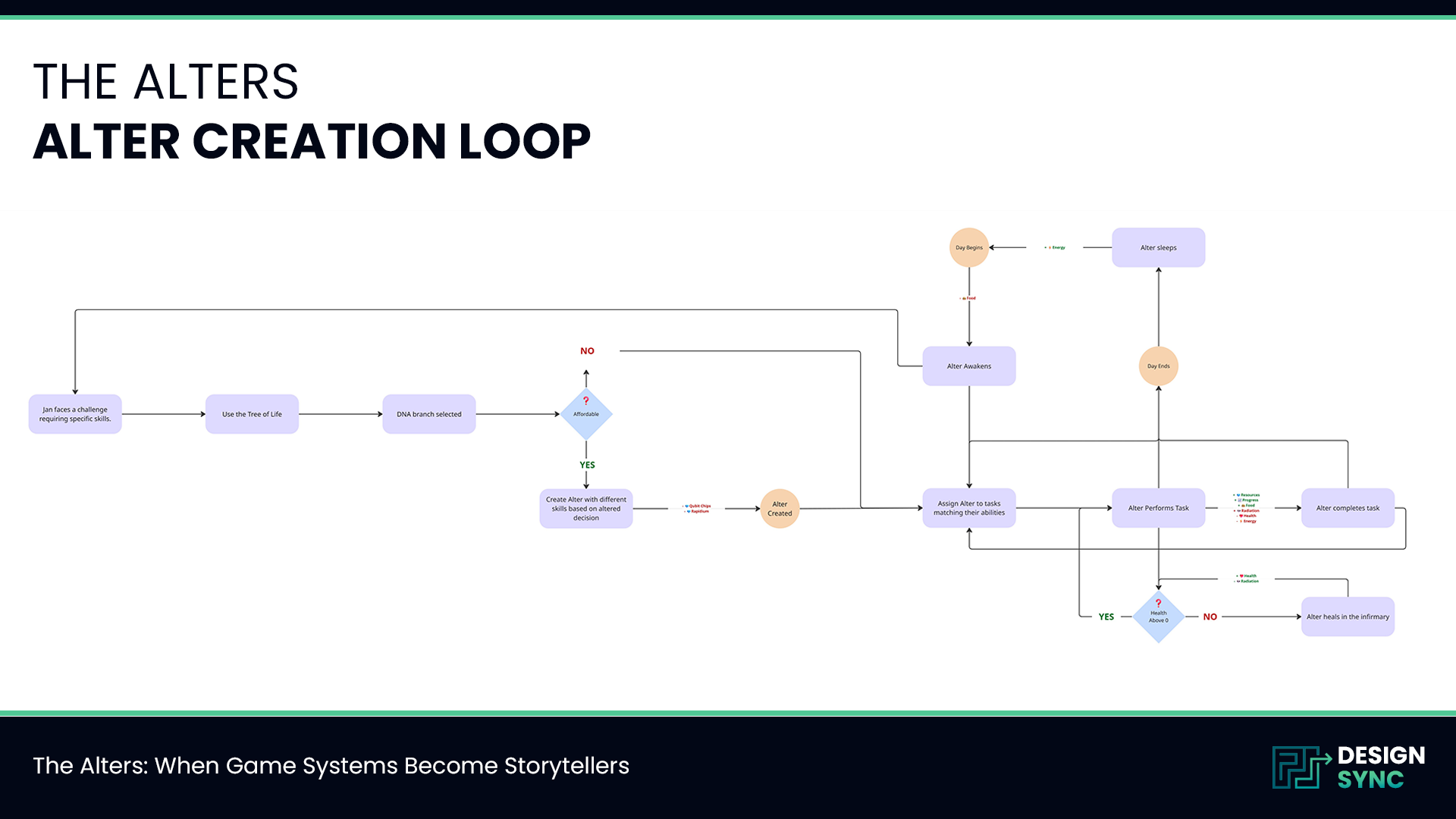
You can’t avoid the system once you build your first Alter, and by the third, it all makes sense. Each time you create one, it’s not just about getting the skills you need. You're confronting a version of yourself you never became, and then working with them every day.
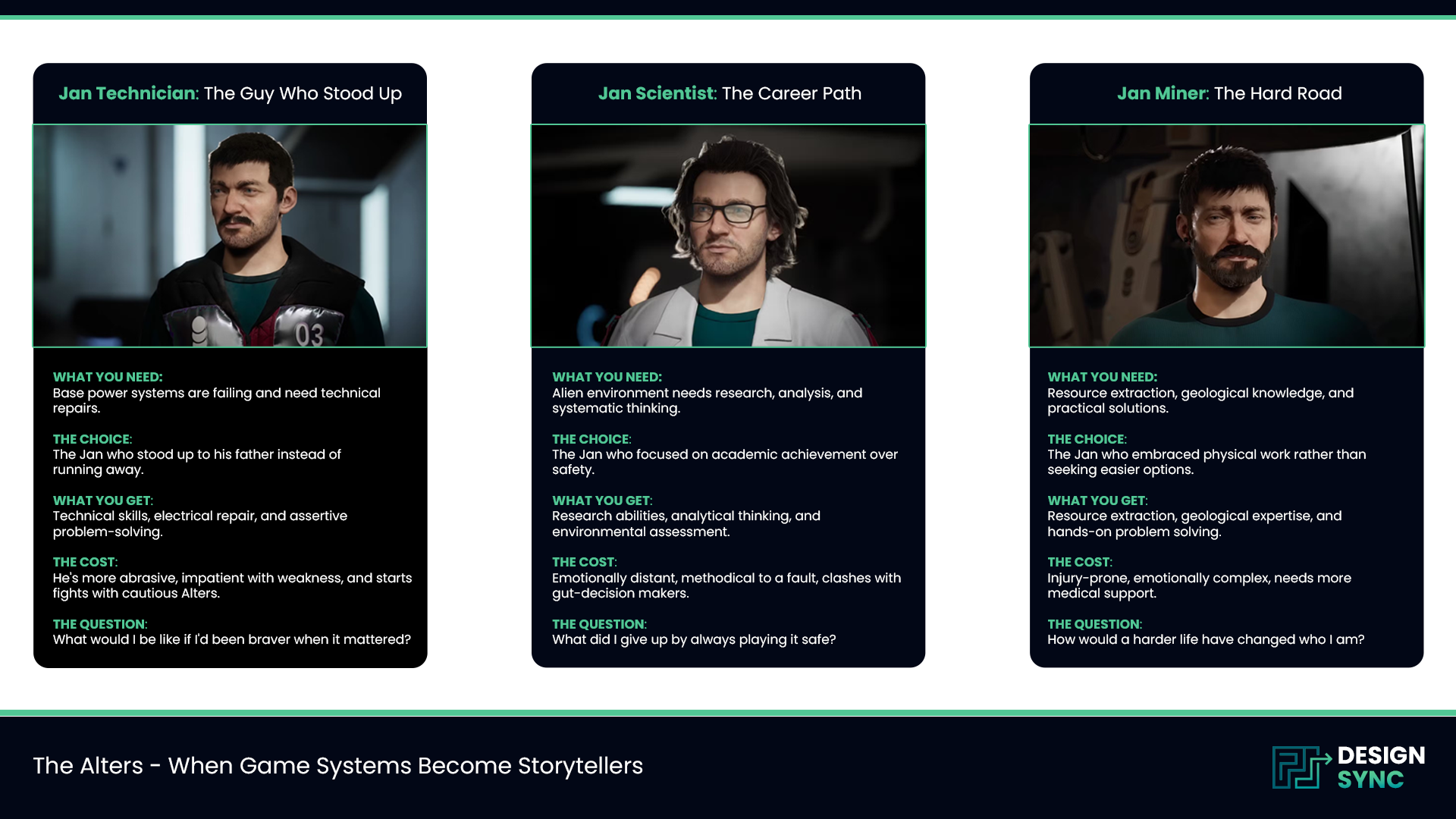
What’s surprising is that it’s not all conflict. As your crew grows, similar personalities connect. They bond, support each other, and work together. Some of the interactions are genuinely sweet, not because the game tells you to care, but because you’ve earned moments of calm between the chaos.
And Then It Breaks
Not in a dramatic, game-over way. In a slow, operational decline. The game starts charging interest.
A tired Alter isn't just less productive; they’re harder to stabilise. A missed task isn't just lost output; it compounds into delayed builds, weaker research, worse food, and longer recovery. Your margin evaporates.
You’re not failing. You're falling behind.
That's the game’s real move: it doesn't punish mistakes. It converts them into operational debt. Every decision has a recovery window, and the cost of being behind is having to keep going while you recover.
And that's the moment the system stops feeling like survival design and starts feeling like storytelling.
What makes this work isn't just the big existential framing. It’s the day-to-day rhythm. You settle into a routine, build confidence, start feeling like you're in control… and then something external hits (an electric storm, a hostile shift in the environment) or something internal breaks down (a power failure, morale collapse, or even a coup).
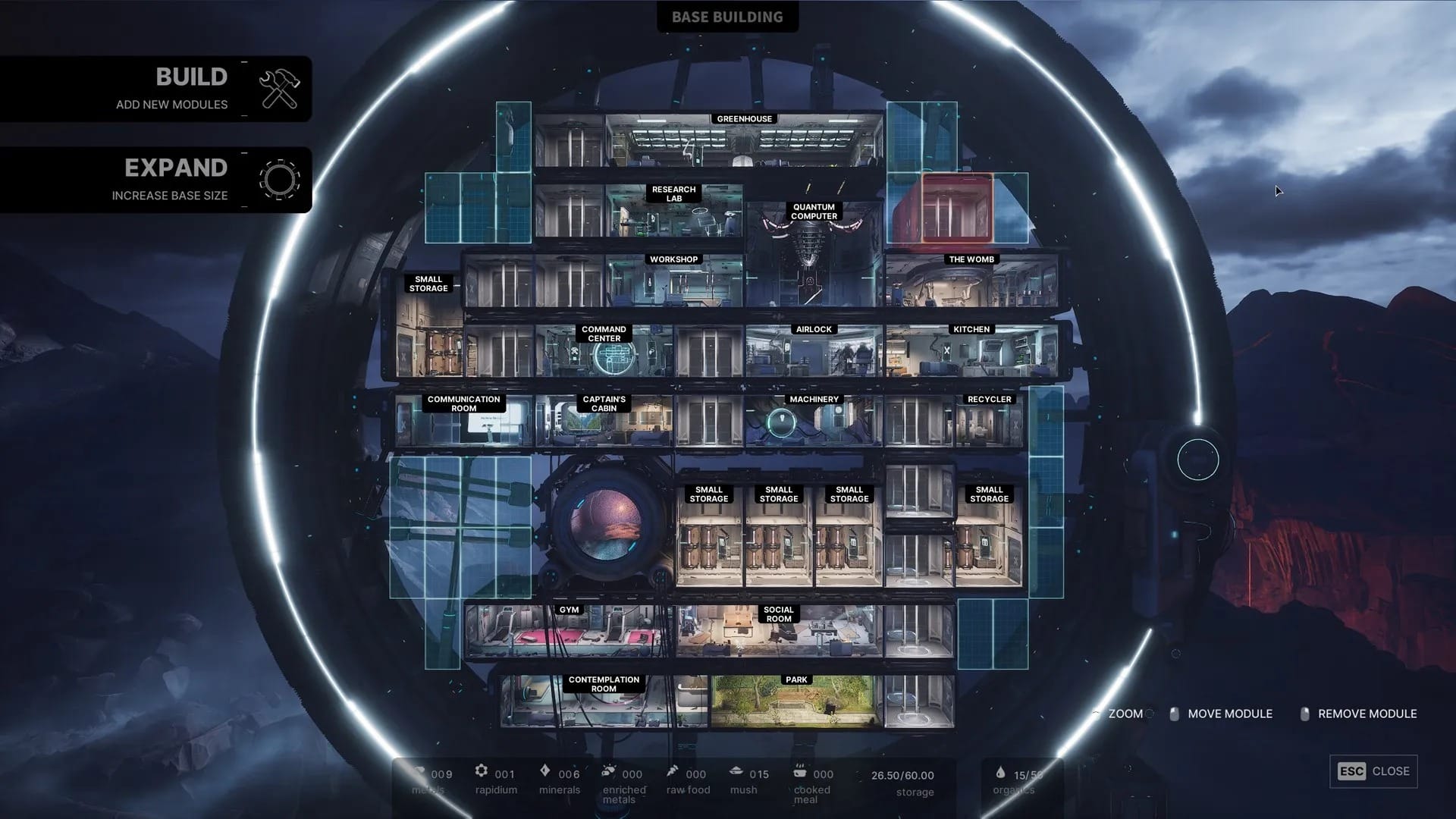
The loop isn’t just "problem → solution.”
It's "flow → disruption → recovery", over and over, until the base feels less like a puzzle and more like a life you're trying to keep stable.
Where It Hits: When Constraint Creates Meaning
All of that– the debt, the compounding failure, the creeping operational drag– only works because the game has set the stakes right from the start. The constraints are doing real design work.
Limits That Actually Mean Something
You can only create a few Alters across a full run, and that constraint serves a valuable purpose: it forces prioritisation. Suddenly, planning stops being purely practical and starts feeling like a set of value statements.
Scarcity forces you to actually commit. You can’t just build every specialist. You have to choose which version of yourself to bring into existence, and that choice says something about you, not just about your strategy.
Do you create a confident leader or a technical specialist? Both solve real problems... But both also quietly reveal what you think matters most at the moment. Sometimes, that can be surprising.
That's where The Alters stands out. Resource management turns into something closer to philosophy. You can’t be everything to everyone—not even to yourself.
Stories That Write Themselves
The most interesting thing about a playthrough of The Alters isn't the main story. It’s the atmosphere that builds up from the choices you make.
A base full of risk-taking Alters feels totally different from one filled with cautious ones. Your mechanical choices shape the emotional atmosphere, without any heavy-handed storytelling.
Most games that aim to create this kind of tone reach for morality systems—sliders, karma meters, alignment tags. The Alters doesn't bother. Instead, your decisions are consequential in ways that compound quietly over time. Unlike typical morality systems where choices feel abstract, here your regrets and what-ifs directly affect survival.
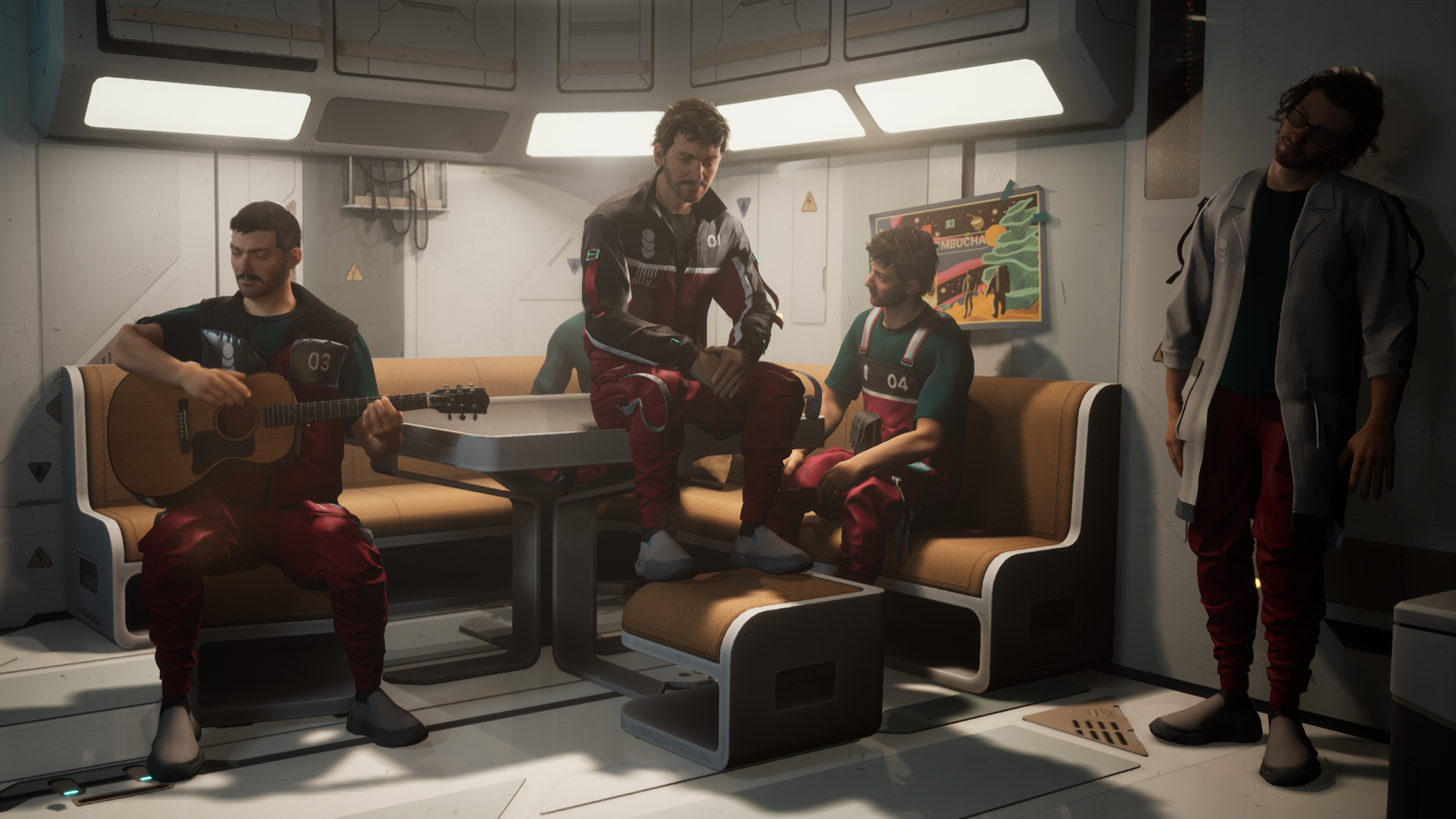
There's no "you chose the dark path" notification. Instead, your base simply reflects the version of yourself you kept building toward, and you feel it before you can name it. That's emergent narrative working at its best: emotional atmosphere created by your mechanical choices, not narrative direction."
That's a rare thing. The system earns its emotional impact through gameplay, not cutscenes.
When Mechanics Actually Mean Something
This is where it clicks: the game keeps turning abstract ideas into practical decisions. You’re not just exploring identity as story flavour; it's part of the survival loop. Growth isn’t a cutscene reward; it's what keeps the base functioning. It's a mechanical necessity.
Here's the test I use for whether a game's systems are doing genuine narrative work: could you remove the story and still feel something?
In The Alters, you could remove every cutscene, and most of the dialogue, and the main emotional experience would survive. The friction between Alters, the weight of each decision, and the growing cost of neglecting someone's needs. None of that lives in the writing. It lives in the systems.
Still, the narrative isn't irrelevant. It gives the systems vocabulary. Without Jan’s backstory, the Tree of Life would just be a list of characters. The writing doesn’t create the emotion, but it helps you understand what you’re feeling and why. That distinction matters.
That's rare. Most games use mechanics to lead players to emotional moments set up by the story. The Alters flips this: the mechanics create the emotional moments themselves, and the narrative gives them context.
When you need an engineer and the only way to get one is to face the version of yourself who stayed in school, that isn't just good writing. That's systems doing narrative labour.
Where It Struggles: When Meaningful Choice Gets Exhausting
The loop’s greatest strength—and its biggest problem—is that it never lets up.
Meaningful Choice Fatigue
When every decision carries existential weight, it starts to feel like work. Call it meaningful choice fatigue.
By hour twenty, creating new Alters starts to feel like homework. What felt profound early on becomes routine optimisation. You develop strategies that skip self-reflection entirely, turning psychological exploration into spreadsheet management. When every decision feels significant, nothing feels special anymore.
This is where the game risks falling into the same trap Spec Ops: The Line did, just in a softer form. Spec Ops forced players into morally compromising situations to make its point, and many pushed back—not because they missed the theme, but because they didn't consent to being pushed through it.
The Alters isn't that aggressive, but the lesson applies. If someone came for survival strategy, forcing psychological weight can start to read as friction. The line between theme and preaching is agency.
The Efficiency Problem
Players quickly find optimal Alter combinations that trivialise survival. The confident leader + the technical specialist + the resource expert setup works so well that the psychological complexity collapses.
The game doesn’t always maintain the balance between mechanical efficiency and emotional honesty. When things go wrong, and the base is on fire, players pull the lever that works. This takes away what makes the system special and really hurts replayability.
Running Out of Personalities
After you create 6-8 Alters, the life paths start to feel limited. The branching tree that once seemed endless at first reveals its edges. Late-game Alters often repeat personality types, turning them into little more than stat bonuses with cosmetic differences.
Life paths repeat, personalities start to blur, and the magic fades into stat packages with familiar voices.
That isn’t always a flaw. Sometimes it's the point. The game starts to hint at a quiet nature-vs-nurture argument: different lives can still lead to similar patterns. You start to notice who gets along, who softens, who becomes tougher, and the base starts to feel less like a collection of unique characters and more like a social ecosystem built from variations of the same core.
This is, at times, one of the strongest aspects of the game. It feels like a genuinely interesting (though occasionally stressful) take on cloning. One of the better ones I've seen in games. It's thought-provoking and makes you wonder what you and your Alters would be like.
However, the game doesn't consistently earn it. In places, it feels intentional, a deliberate observation about identity and inevitability. In others, it feels like a production constraint dressed up as philosophy.
The system tends to break in two predictable ways: players either optimise for emotion, or the emotion becomes routine. Both are design problems worth solving before release.
Learning from Other Games
The Alters isn’t the first game to build meaning from choice, but it’s one of the few that makes meaning persist as a system. That changes the comparison set.
Mass Effect: Chemistry vs Contradiction
Mass Effect builds team identity through contrast. Garrus brings tactical expertise. Liara offers biotic powers. Wrex provides raw strength. You recruit specialists from different backgrounds, then deepen the squad through loyalty missions, conversations, and long-term relationship arcs.
The Alters flips this completely. Instead of recruiting different people, you create different versions of yourself. While Mass Effect builds team chemistry through relationships between different people, The Alters creates tension from contradictions within a single person.
Key difference: Mass Effect’s crew members work well together because they’re fundamentally different. The Alters crew, on the other hand, clashes because they share the same origin but made different choices. Your engineer Alter and social Alter both remember the same childhood, the same failures — they've just processed them differently. That shared origin is where the friction comes from, and it's what makes the system feel personal instead of procedural.
Takeaway: If your mechanic is identity-driven, your cast can't just be roles. They need to be interpretations — different ways of responding to the same core experience.
Persona 5: Time vs. Identity
Persona creates meaningful choices through time management. Do you spend time with Ann or Ryuji? Do you focus on school or your social life? Each choice shapes your character and your combat power, creating momentum through scheduling pressure.
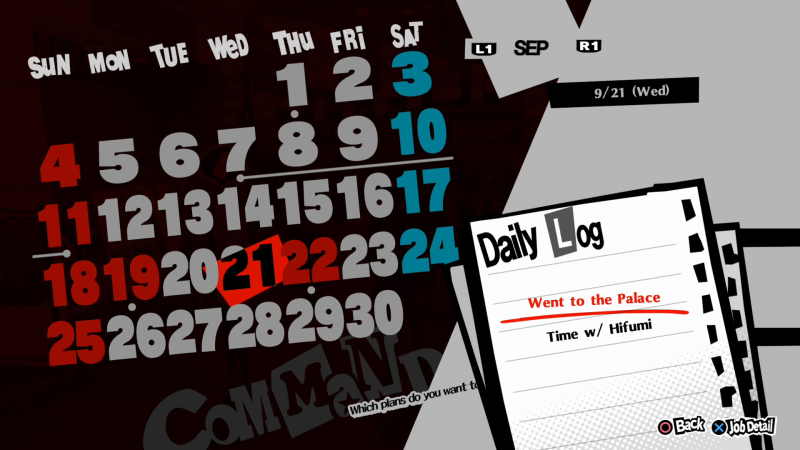
The Alters uses similar resource scarcity, but with existential stakes. Instead of asking, "Who matters in your life?" it asks, "Which version of yourself matters most?"
Key difference: Persona is about building the future you want. The Alters is about filling the present with versions of your past, so the emotional energy moves backwards, not forward. That’s much harder to sustain.
Takeaway: Reflection is powerful, but it doesn’t automatically create momentum. Scarcity isn't the point; momentum is. If your game asks players to look inward, you need an equally strong force pulling them forward. Otherwise, introspection starts to feel like churn.
Life is Strange: Exploring Consequences vs. Living Them
Life is Strange is all about reversibility. The rewind mechanic lets you test outcomes, compare consequences, explore different “what if” scenarios, and then adjust your choices. The butterfly effects add up, but you can always try again.
The Alters makes you live with every choice. There’s no rewinding. The Alter you created is standing in your hallway, and he has opinions about the decisions you made last Tuesday.
Key difference: Life is Strange changes the timeline, while The Alters changes the cast. One lets you retry choices; the other turns your choices into people you have to keep living with.
Takeaway: Commitment is a design tool. If your system doesn’t let players reset, you buy deeper stakes, but you lose some player experimentation. You’ll need to repay that cost with variety, new contexts, or evolving meaning over time.
A Framework for Identity-Driven Design
All the comparisons above point to a shared design challenge: identity-driven mechanics generate depth, but depth alone doesn't create momentum. Here's a practical framework I use to stress-test whether a system is actually doing the work:
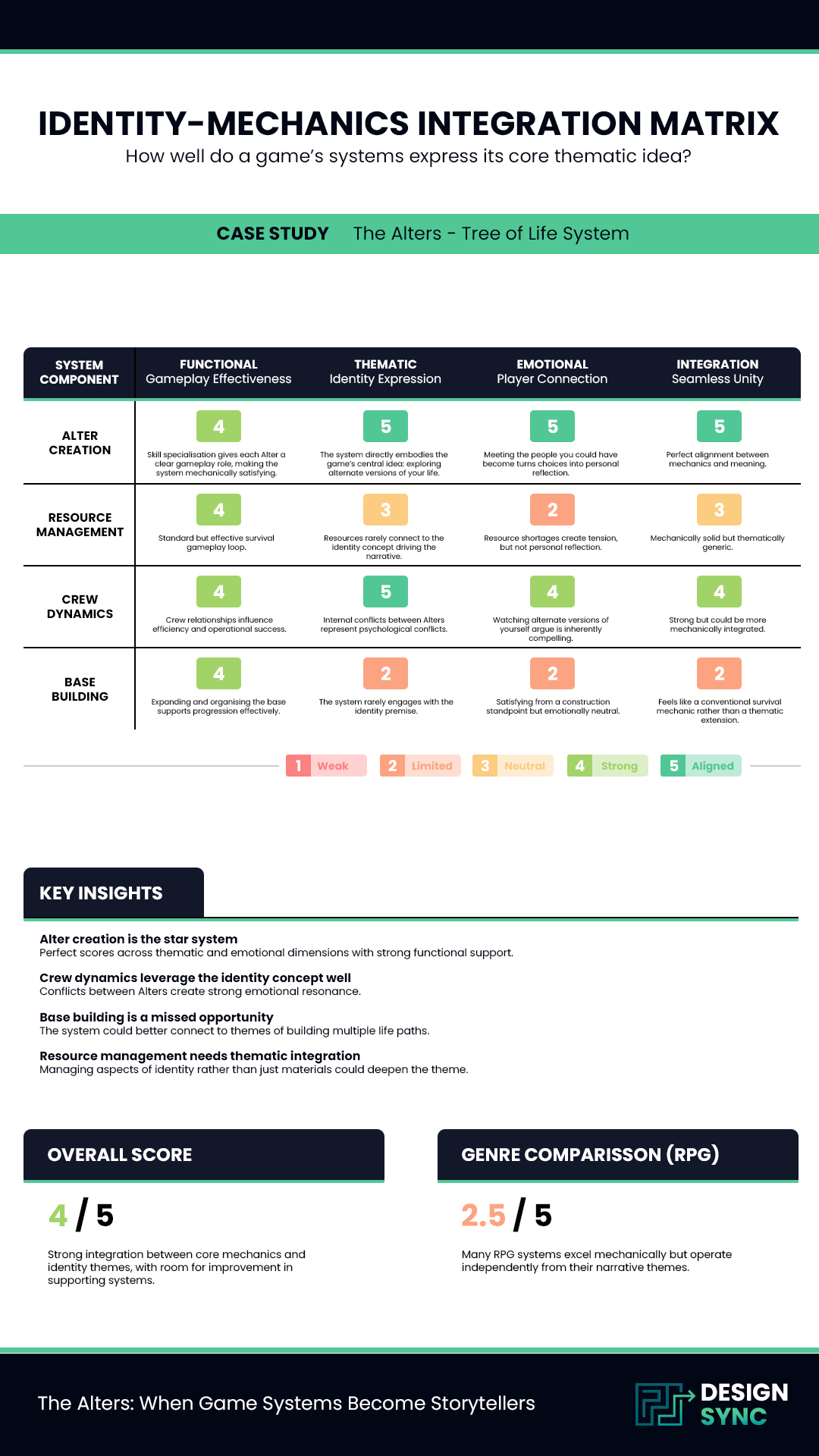
The Four-Layer Check
- Functional — Does it work as pure gameplay? Is it fun and balanced?
- Identity — Does it explore or express character identity in meaningful ways?
- Emotional — Does it create the feelings you intended, or something else entirely?
- Integration — Do these layers reinforce or conflict with each other?
Red Flags to Watch For
- Players optimising around emotional engagement entirely.
- Introspection that can be faked rather than felt.
- Identity choices that feel cosmetic rather than consequential.
- Self-reflection becomes routine instead of revelatory.
Design Targets
- Identity choices should change gameplay, not just dialogue.
- Consequences that are lived in the system, not just stated in text.
- Meaning that evolves over time rather than flattening into routine.
- A loop that resists being "solved" into a single best path.
- Depth that players can opt into rather than being forced through
This isn't a checklist: it's a lens. Use it to spot where your systems might break down before they actually do.
What This Teaches Us
The Alters proves that identity-driven mechanics can work at scale. It also reveals what it costs to make meaning operational.
The wins are real. Constraint forces prioritisation: when you can only create a few Alters, every choice becomes a value statement. Practical pressure makes you reflect in a real way: the game doesn’t just ask who you could have been, it makes you answer that question to keep the base running. And contradictions generate tension: your crew isn’t just a group of different people, it’s a collection of different interpretations on the same life.
But the ways things can go wrong are just as important. Meaning becomes exhausting when it never lets up. When you’re under survival pressure, efficiency beats authenticity because it’s the lever players can always pull. And finite identity options eventually show their seams when the branching tree narrows into familiar patterns.
The real lesson isn’t about solving these tensions. It's in recognising them as the design space: meaning vs efficiency, efficiency vs authenticity, introspection vs entertainment.
The Blueprint It Leaves Behind
Games have always been about systems, but The Alters reminds us that systems can also be about self-discovery without giving up mechanical depth to get there.
Its rough edges are part of the point. The Alters doesn't arrive as a final answer; It arrives as a door left open: a clear demonstration that mechanics as meaning can carry real weight, and a reminder of how hard it is to keep that weight intact over time.
The real question isn’t whether identity-driven design works. It’s how long it can hold onto its emotional impact before players find ways around it.
The production costs are real. Players are clearly hungry for it. What's missing is refinement: designs that sustain the meaning, make introspection optional without becoming cosmetic, and prevent the loop from turning into a solved puzzle.
The most important thing The Alters proves isn’t just that identity-driven design can work. It’s that players will meet a game halfway if the system gives meaning a place to live.
Thanks for reading! ✌️
If you found this breakdown useful, subscribe to Design Sync for more.
Read next: → Clair Obscur: Expedition 33: Redrawing the Rules of RPG Combat